MASc Thesis
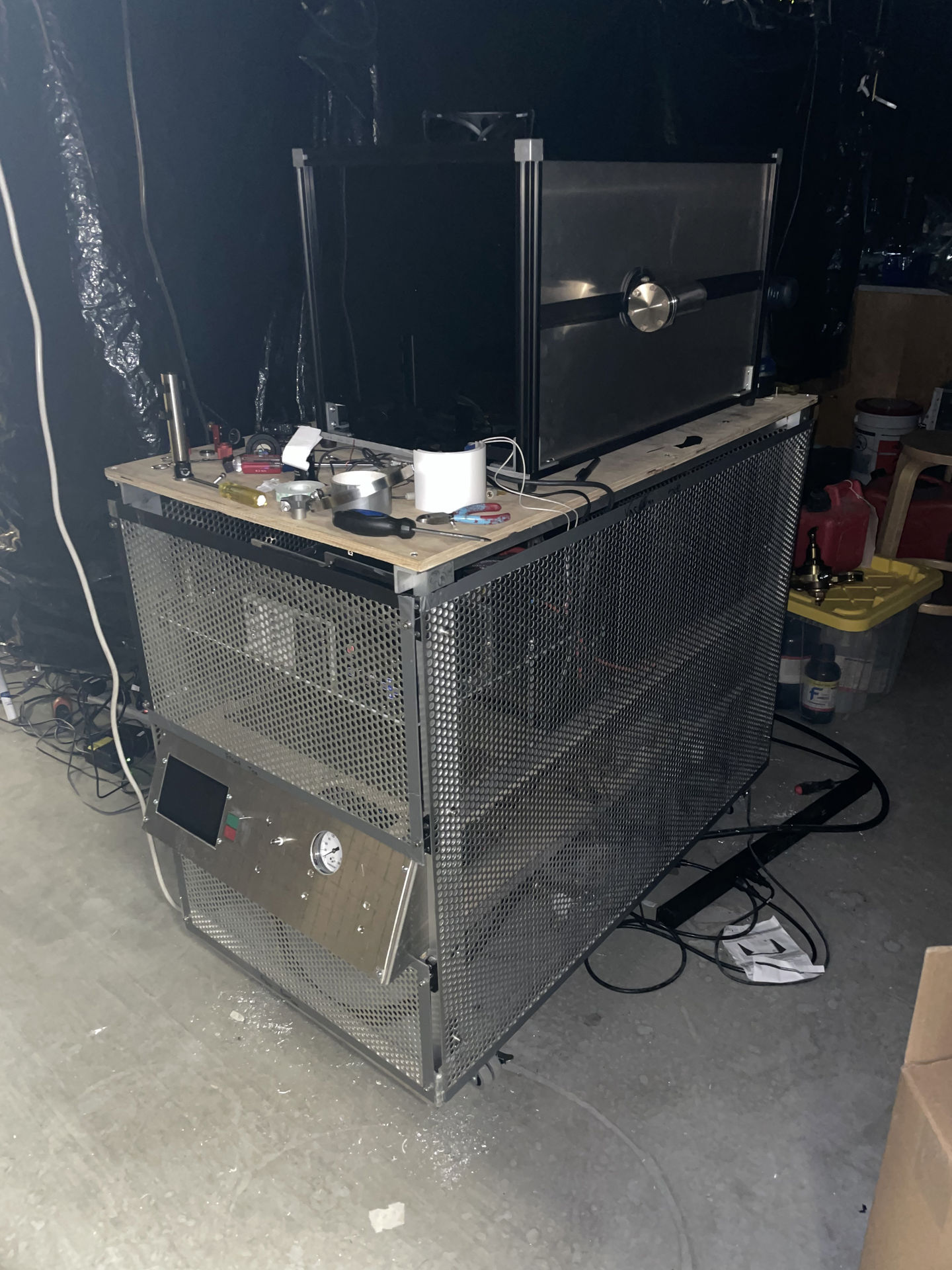
My master’s thesis project was to build a portable version of a cold-atom pressure standard.
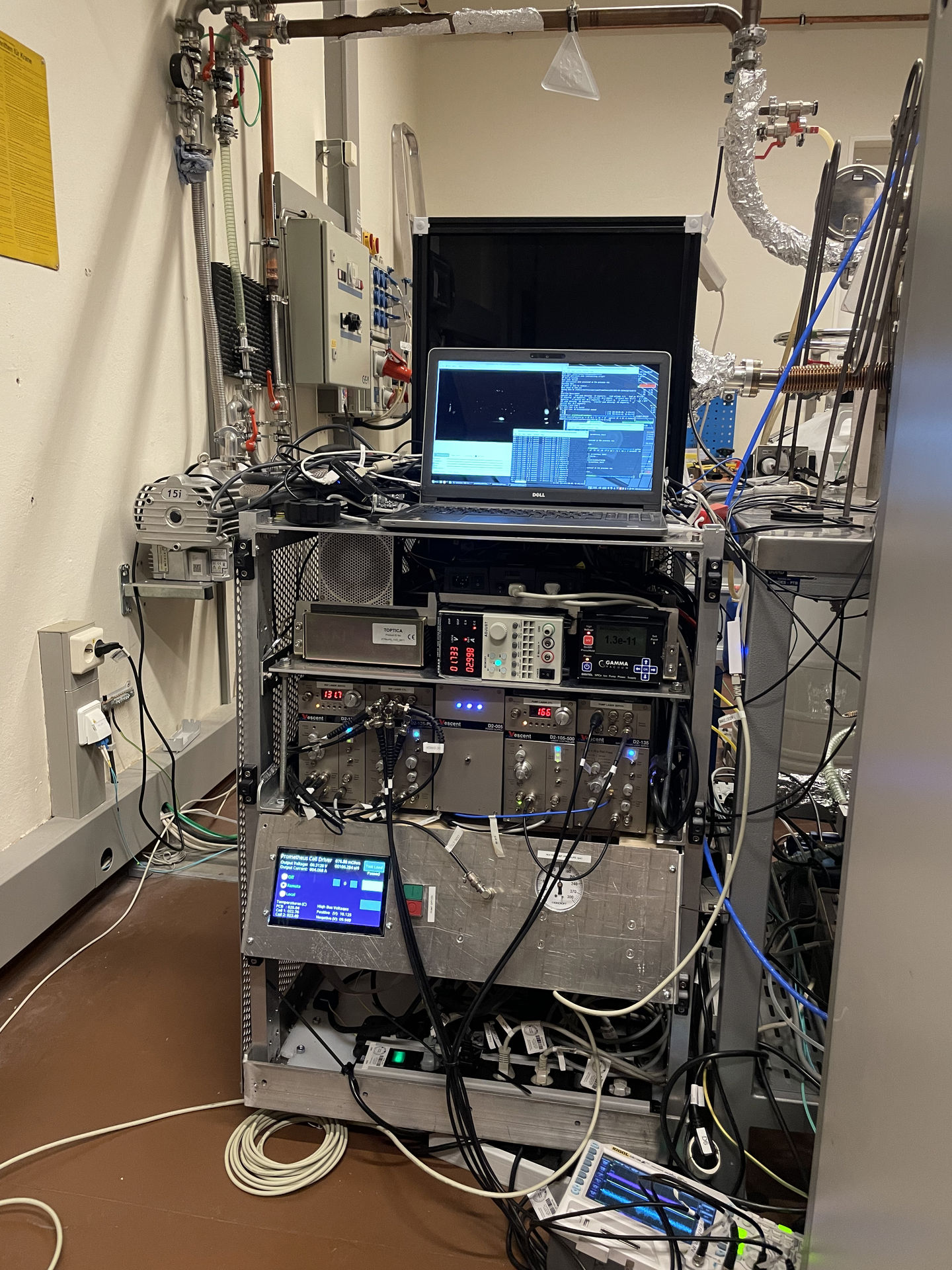
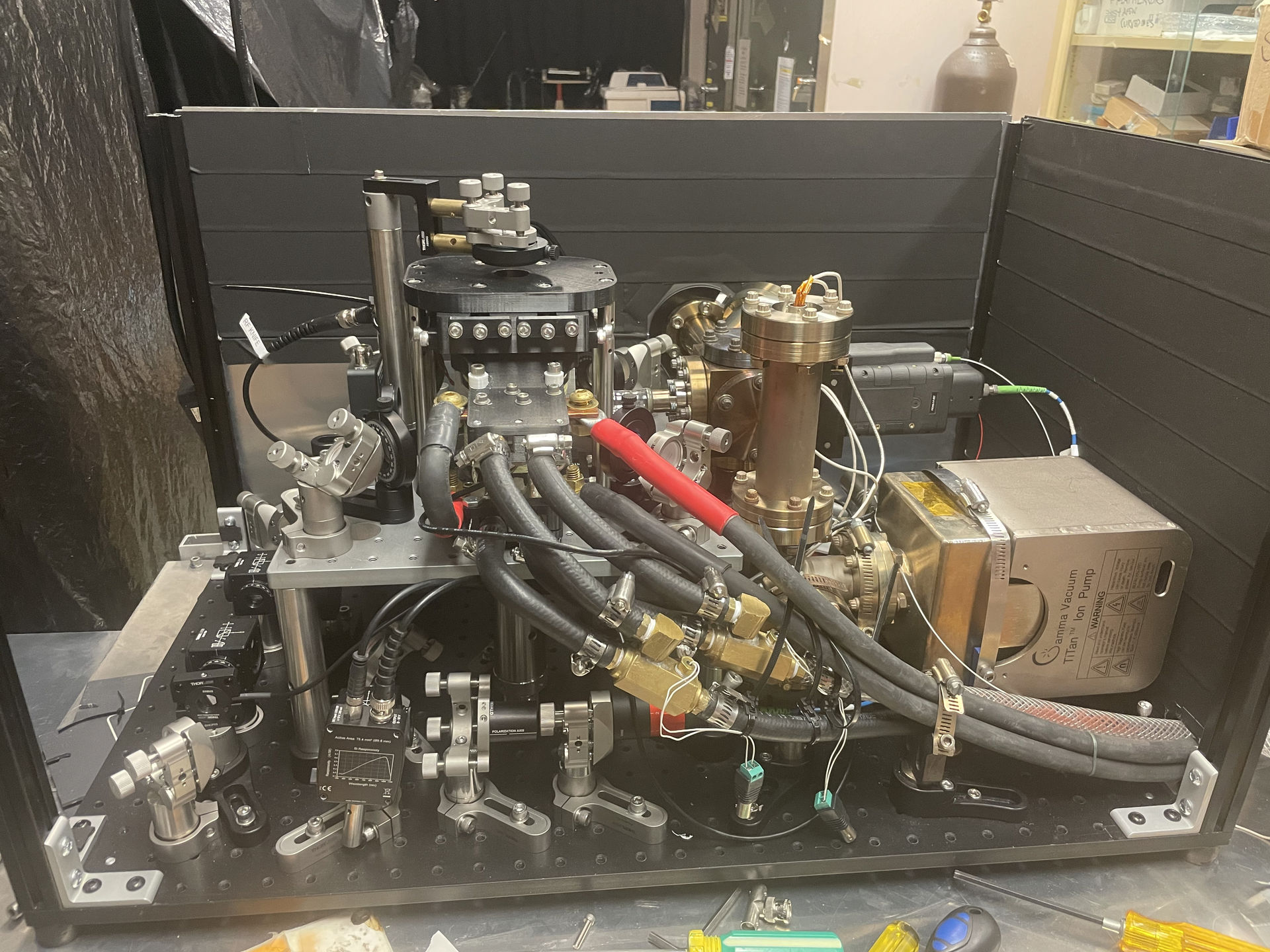
In short, I built a semi-portable device that could trap rubidium atoms using lasers and magnets, and measure their fluorescence. We measured how many atoms were in the trap using the fluorescence signal and used it to determine the rate at which atoms were ejected from the trap, which allowed us to calculate the density (and thus pressure) of the background gas. We sent the device to Physikalisch-Technische Bundesanstalt in Berlin (the German national standard organization) to compare against their state-of-the-art vacuum standard. When I left the lab, data was still being taken to compare the performance of the two systems.
As part of this project, I
- designed and fabricated water-cooled magnetic field coils that could produce >400 G/cm while remaining within 1 C of room temperature
- designed a microcontroller-based feedback controller with loop rate of 200 kHz to stabilize the lasers
- hacked together a 6.7 GHz microwave source from spare parts around the lab
- designed and aligned the free-space optics and fiber network to lock the lasers and distribute the light to two different magneto-optical traps
- fabricated miscellaneous enclosures and components using a mill, waterjet, 3D printer, and hand tools
- wrote python code to control the hardware, schedule experiments, and record test settings
- wrote python code to automatically analyze test results
Here is a video showing atoms being trapped then released by sweeping the frequency of the laser:
My full thesis can be downloaded here or here. It was written prior to the device being shipped to Berlin.